What to check before booking a shared yacht cruise
Start with the group itself
A shared yacht cruise works best when everyone in the party has similar expectations. Before you look at any options, sit down with the group and settle a few basics. How many people are coming? That number determines the kind of vessel you can join, because shared cruises have a fixed capacity per departure. If the group is seven or eight, for example, you may need to check whether the boat runs a per-person price or a flat hourly rate. Knowing the headcount also helps you avoid the awkward moment when someone can’t board because the booking deposit was based on a smaller group.
Timing is just as important. A shared yacht cruise usually runs on a set schedule, so ask everyone which dates and time slots they can manage. If the group includes early risers and night owls, the compromise may be a late-afternoon departure that works for both. Once you have a rough window, you can start comparing what’s available on those days.
Understand the pricing model
Shared cruises tend to be priced per person, but some operators offer a fixed package for the whole party. The difference matters. With a per-person price you pay only for the seats you use, which can be cheaper if the group is small. A fixed package gives you the whole boat for your group alone, but the total payable is the same whether you fill every berth or not. Read the fine print on the booking site to see which model applies. If the listing says “per person,” confirm whether the price includes everything or if extras such as water sports equipment are billed separately.
Deposits are another detail worth checking. Most companies ask for a booking deposit to hold your spots. The deposit amount and the refund policy vary, so ask what happens if someone drops out after you’ve paid. A clear cancellation window protects both you and the operator.
Check what’s included in the trip
A shared yacht cruise is more than a boat ride. The inclusions can make or break the experience. Look for a list of what comes with the ticket: food, drinks, equipment, crew service. Some cruises offer a full meal and an open bar, while others provide only light snacks and soft drinks. If the group expects a proper dinner, a package with limited catering will disappoint. The same logic applies to water toys. If your party wants to jet ski or parasail, make sure those activities are part of the inclusions or available for an extra charge. You don’t want to arrive and find that the only activity on board is swimming.
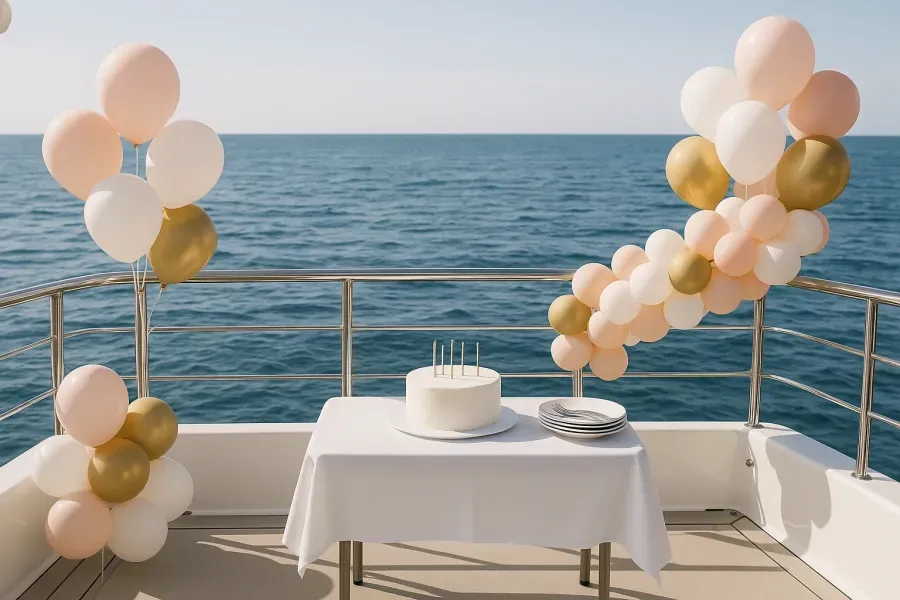
It’s also worth checking the length of the cruise. A two-hour sail feels very different from a four-hour one. Short trips work well for sunset views and a quick drink, but a longer outing gives you time to swim, use the water toys, and relax. Match the duration to what the group really wants to do.
Look at the vessel and its capacity
The boat itself matters more than most people think. Shared cruises run on a variety of vessels, from small motor yachts to larger catamarans. Each has a different layout, deck space, and seating arrangement. If the group includes anyone who gets seasick, a catamaran’s steadier ride may be a better bet than a monohull. Check the photos and deck plans on the booking page. Is there enough shade? Are there indoor and outdoor seating areas? A boat with a crowded main deck and no quiet corner can feel cramped after an hour.
Capacity is not just about numbers. A vessel rated for 20 passengers may feel full with 18 adults moving around. If the group values space and comfort, choose a departure that limits the number of guests. Some operators cap the booking at a lower number than the legal maximum to keep the experience comfortable. That’s a good sign.
For a practical example, consider a trip organised through Sunset Yacht Dubai. Their shared cruises typically run on well-maintained boats with clear capacity limits, and the crew handles the logistics so you can focus on the group’s enjoyment. It helps to verify the exact vessel before you pay, because the difference between a spacious catamaran and a tight motor yacht is something you feel once you’re out on the water.
Review the itinerary and stops
Not all shared yacht cruises follow the same route. Some hug the coastline, giving you a view of the skyline and the beaches. Others head out to open water for a swim stop near a sandbar or an island. The itinerary affects how much time you spend on the boat versus in the water. If the group wants to swim, snorkel, or use water toys, pick a cruise that includes a proper swim stop. If the main goal is sightseeing and photography, a route that stays close to the landmarks is better.
Ask about the number of stops. Some cruises drop anchor once, others make two or three stops. Each stop adds time to the trip but also breaks up the journey. A single long stop may feel lazy, while too many stops can feel rushed. Balance matters.
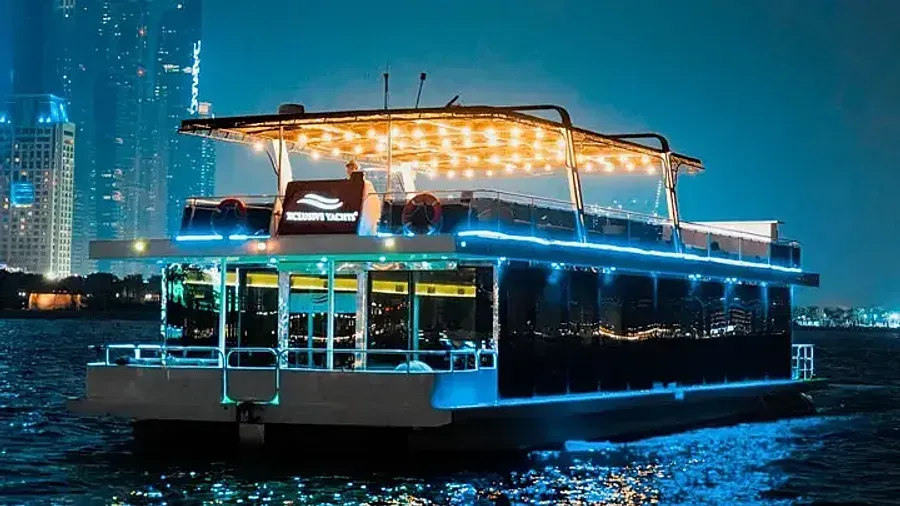
Confirm the crew and safety setup
Safety is not something you can see on a booking page, but it’s worth asking about. A reputable operator will have a licensed captain, a trained crew, and safety gear that meets local regulations. Life jackets, fire extinguishers, and first-aid kits should be standard. If the cruise includes water sports, check that the crew gives a brief safety talk before anyone gets on a jet ski or a flyboard.
You don’t need to become an expert on maritime regulations. A simple question to the booking agent, “What safety equipment do you carry?”, usually tells you how seriously they take it. If they answer with confidence and detail, you’re in good hands. If they brush it off, consider another option.
Read the terms for extras and gratuities
The headline price is not always the final amount. Some cruises list a base rate and then charge for fuel surcharges, port fees, or service charges. Ask for the total payable before you confirm the booking. Also check whether gratuities are expected. In some markets, tipping the crew is customary; in others, the service charge covers it. Knowing this upfront prevents an awkward end to the trip.
Extras such as professional photography, video packages, or private transfers from your hotel may be offered as add-ons. Decide as a group whether those are worth the extra cost. Often the crew will take photos with your phone for free, so a professional package may not be necessary.
Think about the weather and season
Dubai’s weather is generally pleasant for most of the year, but summer afternoons can be very hot. Morning or late-afternoon cruises are more comfortable during the hotter months. Winter evenings can be breezy, so bring a light jacket. The operator should have a weather policy: if conditions are unsafe, they may reschedule or cancel. Ask what happens in that case. A good company will offer a full refund or a new date rather than forcing you onto the water in rough seas.
Checking the forecast a day before the cruise is common sense. If the wind is high, the boat will rock more, and some guests may feel queasy. A shared yacht cruise is supposed to be relaxing, so pick a day when the sea is calm.

Final practical checks
Before you hand over any money, run through a short mental checklist. Confirm the meeting point and the boarding time. Some marinas require a short walk from the car park; others offer valet parking. Make sure everyone in the group knows where to go and when to be there. If anyone has mobility issues, check whether the boarding ramp is accessible. Small details like these can turn a smooth day into a stressful one if they’re overlooked.
When you book with a service such as Sunset Yacht Dubai, the crew usually sends a confirmation that includes all the details you need. Read that confirmation carefully. It should list the vessel name, departure time, meeting point, inclusions, and the cancellation policy. If anything is missing, ask before the day of the cruise.
A shared yacht cruise can be one of the most enjoyable ways to spend time on the water with friends or family, especially when everyone has a clear picture of what to expect. By checking the group size, the pricing model, the inclusions, the vessel, the itinerary, the safety setup, and the terms, you set yourself up for a day that runs smoothly from start to finish. The goal is to relax and enjoy the sea without surprises. A little planning beforehand makes that possible.
Ends · GOLDENWAKE